OVEN · for hookah venues, retail and distribution

Coconut charcoal
to one specification.

  • Customs-cleared stock in Riga
  • Contractual quality limits
  • COA with every batch
  • 7 English pack formats

Three cube sizes, one set of quality requirements written into our production contract. Tell us the sizes and packs you need — we quote from EU stock and send the batch documents with the offer.

OVEN 26 mm coconut charcoal — 20 kg master case
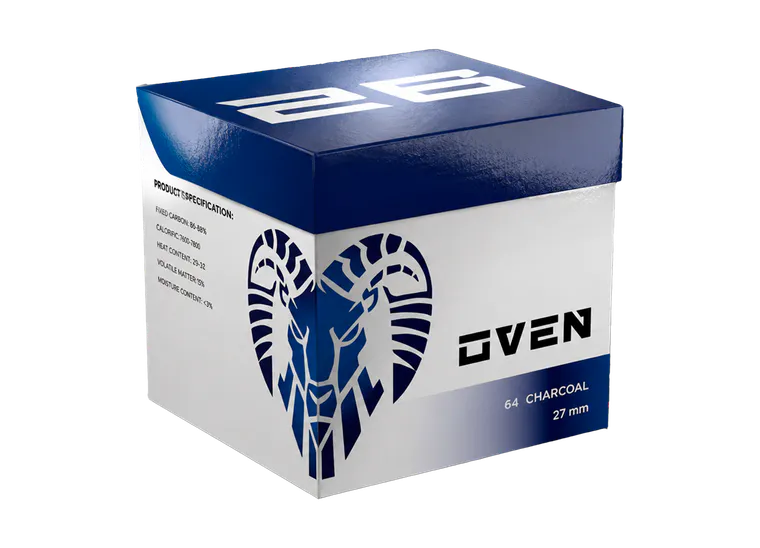
OVEN 26 mm · shipping master case20 boxes20 kg net · 64 cubes per box

Contractual quality limits

  • ash content≤ 2.5 %
  • moisture≤ 5 %
  • fixed carbon≥ 75 %

Contractual limits. Measured results are recorded in the batch COA.

Availability of your selected packs is confirmed in the quote.

Products

Find your OVEN size.

Start with 26 mm for large bowls and terraces, 25 mm for an all-round option, or 27 mm for a larger cube. The figures shown here are for the featured retail boxes.

02

The largest OVEN cube, in 1 kg retail and venue packs.

OVEN 27 mm

27mm

Cubes
54
Net
1 kg
Master case
20 kg
Explore OVEN 27 mm
03

An all-round 25 mm cube with a choice of retail and EcoPack formats.

OVEN 25 mm

25mm

Cubes
36
Net
0.5 kg
Master case
20 kg
Explore OVEN 25 mm

The featured retail formats contain different numbers of boxes per master case, each holding 20 kg of coconut charcoal.

Compare sizes

Which cube suits your setup?

OVEN 26 mm

26mm

For large bowls and outdoor terraces.
cubes per box
64
box net weight
1 kg
intended use
Trial with your usual bowls and heat management devices
Explore OVEN 26 mm

Why OVEN

From material to finished cube.

A general overview of coconut charcoal production. OVEN-specific requirements are identified below as contractual limits.

Explore the composition and process
01

Three ingredients

Coconut shell, tapioca and water. No chemical additives or ignition accelerants.

02

Formed and cut

The mixture is formed into cubes, then dried. The nominal sizes are 25, 26 and 27 mm.

03

Cooled before packing

At least 14 days of natural cooling are required before packing — a separate stage after drying.

04

Ready for batch review

Use the finished-product limits below to read the analysis results in the batch documents.

Quality specification

Limits to check before ordering.

These are contractual requirements for OVEN coconut charcoal. Burning time and temperature must be read alongside the test conditions; request the method and available results with the batch documents.

  • ≤ 2.5 %ash content
  • ≤ 5 %moisture
  • ≤ 14 %volatile matter
  • ≥ 75 %fixed carbon
  • ≥ 90 minburning time under standard hookah conditions
  • ≥ 600 °Ctemperature specified in the contract
  • 1 mContractual drop-test requirement: no cracks or crumbling after a 1 m drop onto concrete or tile.
  • 0Contractual requirement: no odour, sparks or smoke during ignition and smoking
View the specification

Packaging

From retail box to master case.

Shown below: OVEN 26 mm Retail. One box contains 64 cubes; 20 boxes make one master case. These are net charcoal weights. Pallet layout and gross shipping weight are confirmed for your shipment.

OVEN 26 mm
Retail box64 cubes1 kg
OVEN 26 mm master case
Shipping master case20 boxes20 kg
calculated weight per cube
15.6 g
sizes in range
25 · 26 · 27mm
Explore all pack formats

Partnerships

Supply for your business.

Distribution

Develop your territory.

  • Build a range for retailers and hookah venues from three cube sizes and their pack options. OVEN 26 mm leads the EU range.
  • Use packaging images and brand materials in your catalogue. The quality specification gives buyers a clear reference for product requirements.
  • Tell us which EU countries and sales channels you cover, along with your expected volume. This gives us a starting point for discussing distribution.
Discuss distribution
Venues & retail

Supply your venue or shop.

  • For a venue, start with your bowls, equipment and coconut charcoal usage. For a shop, tell us which sizes and packs you want to carry.
  • If you are new to OVEN, request samples to assess the product in your own setup. Sample selection and supply terms are agreed separately.
  • Choose the size and pack around your actual usage. Supply terms are agreed with a manager.
Discuss your requirements Store or online retail enquiry ↗

For venues

Plan your monthly order.

Enter your bowls per day, cubes per bowl and working days to estimate monthly usage. Send the result to the enquiry form, then choose the sizes and packs for your order.

Calculate charcoal usage

Packaging

Retailer listing kit.

Download the seven-pack CSV, product descriptions and quality specification. Match available Retail renders to the exact pack reference; request approved artwork for your listing.

Open the retailer listing kit ↗

Shipping

Plan delivery to your destination.

EU orders are supplied from our Riga warehouse. We handle dangerous-goods sea freight from Indonesia; onward transport is agreed for your destination and volume. See how delivery, documents and payment are arranged. Worldwide delivery enquiries are welcome. Routes, documents and transport requirements are confirmed for each order.

Explore shipping arrangements

Straight answers.

All questions
01What is OVEN coconut charcoal made from?

Coconut shell, tapioca and water. Tapioca is a starch that binds the processed shell and gives the cube its shape. No chemical additives or ignition accelerants are used.

02Which size should I choose?

25 mm is the all-round option for most bowls. Consider 26 mm for large bowls, terraces, or 27 mm if you prefer a larger cube. Compare the sizes with your own equipment, then choose a pack around your usage.

03Where is the coconut charcoal produced, and who controls quality?

OVEN is made in Indonesia to a contractual specification. The same limits apply to all three sizes, and every batch comes with a Certificate of Analysis, or COA. Ask a manager for the documents relating to the batch you are considering.

04Is the coconut charcoal in stock in Europe?

Availability is checked for the specific size and pack you need. Tell us the products, quantities and EU destination so we can review the selected items and discuss dispatch.

05Do I have to deal with dangerous-goods sea freight?

No. Coconut charcoal is a class 4.2 dangerous good (UN 1361) at sea, and approvals, safety documents and container stowage from Indonesia are handled by us. We arrange onward delivery from the warehouse and confirm the transport requirements for your shipment.

Start a conversation

What does your business need?

Coconut charcoal for a venue, a new retail range or distribution in an EU market — tell us what you have in mind. Include your destination, preferred sizes and approximate volume if you already know them. If you are still choosing, start with a sample request or a question about the range.

Send an enquiry